
Reading Aloud to Your Child
By Natalie Salaman.
If we were read aloud to by our parents as children, this can inform whether we believe it is a good thing to do with our children and also how naturally it comes to us.
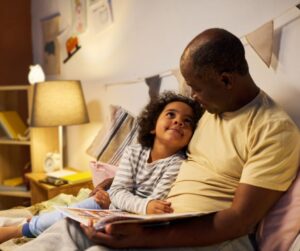
For most people who have been read to by someone they love, ideally lying sleepily in bed, this is felt to have been an enjoyable experience and one of the ways love is shown. As with every behaviour, reading aloud may be connected to culture and specifically our family culture. Research suggests that the reading aloud experience often happens at bedtime but also that it helps inspire in a child an association between books and desirable entertainment.
A love of reading can be a powerful motive to pass it on in this way. Perhaps enjoying our own voice not being interrupted and listened to may also be a prompter! Without doubt children spend more time in front of screens than listening to their parents read aloud, and the ability to get someone else to do it via playlists may be eroding this parental privilege. I urge you not to let it go. The interruptions if they come can make for interesting conversations where emotional themes can be explored in a secure one to one atmosphere.
Fairy tales are particularly good for allowing both dark and light in which can be building blocks to help your child approach other subjects of importance to them, though whether these go with evening reading is an adult decision!
We don’t learn from simple explanation how to use and appreciate language and understand the beauty of how it can conjure up our inner world and build bridges to others but from example. Reading aloud is such an example. It has an important role in expanding young minds and can also do much to strengthen our bonds with our children. Love, empathy, curiosity and imagination can all be stimulated by books and to enjoy books the children need to know what they are and what they can mean through our role modelling.
Children may want to showcase their own reading aloud skills to both you and the animals in their life. A purring cat can be a very appreciative listener, and a sleepy dog might also provide a calm practising space for the child who enjoys passing on this pleasure. Research backs the findings that children who experience being read to show greater leaps in literacy than those who have not had this repetitive ritual in their early daily life.
On my website the Life Story Hub and the links below you will see examples parent prompts to go with the pictures when reading aloud. They can be a safe way of encouraging empathy and reflection in your child although the priority when reading aloud is enjoyment and immersion in another world.
Reading aloud for a parent can of course feel like a chore after another long day but be comforted in that it is highly unlikely to feel like this for a child. The comfort and sense of security and sensory experience of being lulled to sleep is precious. This is the ideal and the challenge is finding the right stories for you both and the right time for which you can concentrate!
For further ideas see Fairy Tales and Words to Wonder Children’s Fairy Tale Images and words to wonder… – Life Story Hub and My Top Ten books My Top Ten Books for Children – Life Story Hub. Therapeutic Stories may be of interest as well. Therapeutic Stories – Life Story Hub
Just in case you need any other reasons beyond the fun to be had, it is said that being read to in early childhood is one of the greatest predictors of literacy and educational success.